
Integra® urinary bladder matrix · 4 configurations
An extracellular matrix derived from porcine urinary bladder matrix (UBM). Decellularised, non-crosslinked and completely resorbable.
FeaturesClinical evidenceOrdering informationInstructions for useResourcesIndications
When a difficult wound microenvironment limits treatment options, Cytal enables a shift from an inflammatory wound environment into one that facilitates cellular infiltration and fast formation of site-appropriate, vascularised tissue.1,3–6
Cytal® provides an environment where the body is more likely to exhibit a higher ratio of M2 (pro-remodelling) to M1 (pro-inflammatory) macrophages.1,2 In a prospective case control study, wound management with UBM resulted in a statistically significant decrease in M1 to M2 scores for both diabetic and non-diabetic patients, which correlated with the rate of wound area reduction.1
Provides an open, porous structure that permits cell infiltration and neovascularisation. Facilitates ingrowth of vascular tissue over avascular structures3–5 and remodelling of site-appropriate tissue.2,6
Supports the development of a vascular wound environment that may allow for follow-up management via additional sheet products, skin grafting or flap reconstruction.7 In contaminated wounds that have been cleaned and/or debrided, Cytal products have facilitated successful wound management.7–9
Pre-clinical results are not necessarily indicative of clinical outcomes.
Integra® urinary bladder matrix
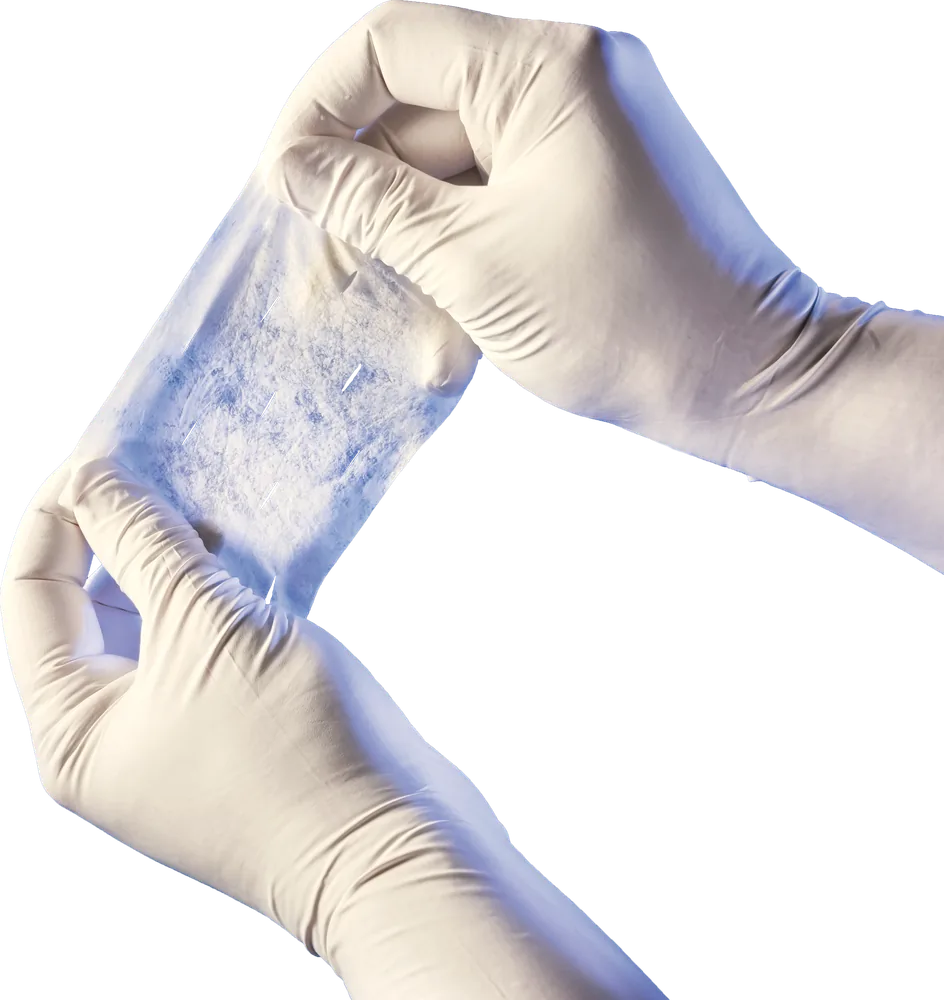
Cytal® Wound Matrix is an extracellular matrix derived from porcine urinary bladder matrix (UBM). Integra’s UBM devices are decellularised, non-crosslinked and completely resorbable.
An acellular, non-crosslinked porcine matrix containing basement membrane and numerous collagens. More layers give longer persistence in the wound bed, so match the sheet to wound depth.
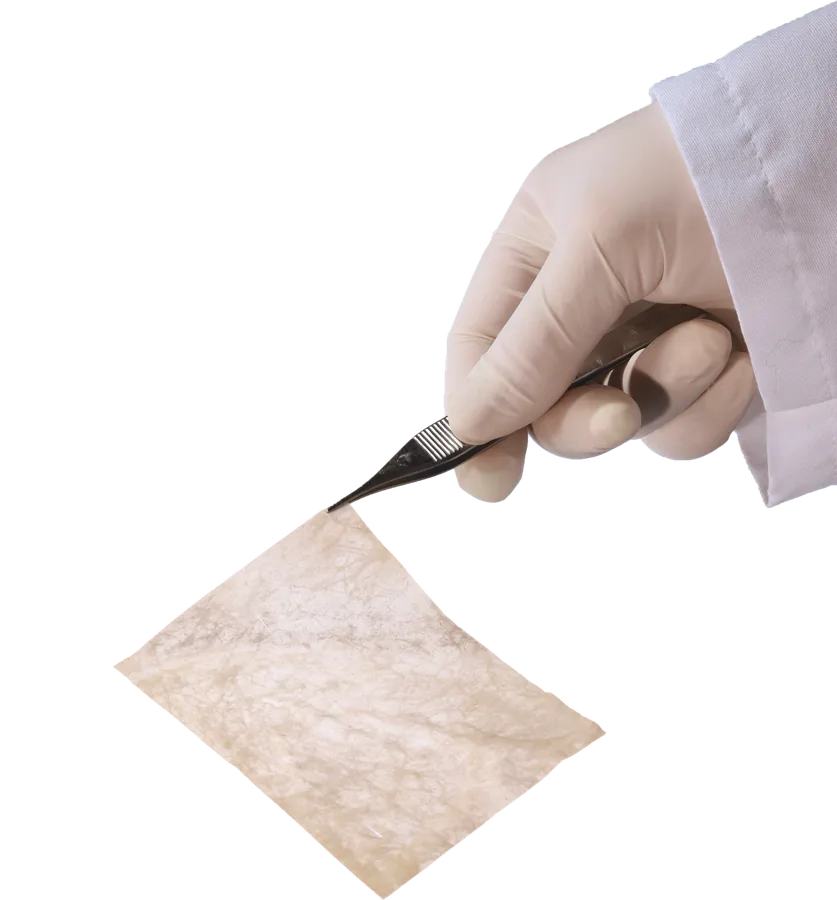
Use together
For irregular or tunnelling wounds, MicroMatrix® UBM particulate may be applied first and covered with Cytal.
Clinical evidence
In 3 peer-reviewed, retrospective case series, 73 patients with trauma and lower extremity wounds involving exposed bone and tendon were reviewed and showed closure rates of 86%, 100% and 100% respectively.3–5
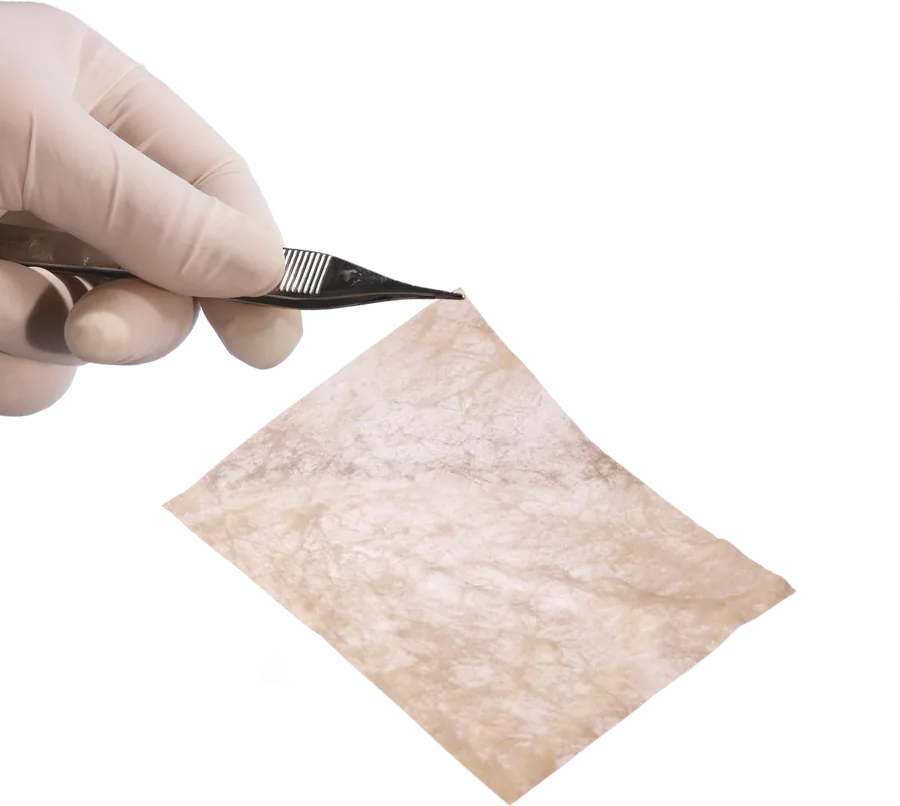
Integra publishes guides that explain Cytal and MicroMatrix, and how to look after a wound once the matrix is in place.
One unit per box. Contact QMed to confirm UK and Ireland availability.
| Size | 1-layer | 2-layer | 3-layer | 6-layer |
|---|---|---|---|---|
| 3 × 3.5 cm | WS0303 | – | – | – |
| 3 × 7 cm | WS0307 | – | – | – |
| 5 × 5 cm | – | WSM0505 | WSR0505 | WSX0505 |
| 7 × 10 cm | WS0710 | WSM0710 | WSR0710 | WSX0710 |
| 10 × 15 cm | WS1015 | WSM1015 | WSR1015 | WSX1015 |
| 16 × 25 cm | – | – | WSR1625 | – |
| 16 × 35 cm | – | – | WSR1635 | – |
The 16 × 25 cm and 16 × 35 cm sheets are Integra’s 3-layer large area wound devices (LAWD).
IFUs are published by Integra on its eIFU portal, so you always get the current revision for your region.
IFU to look for: Cytal® Wound Matrix.
Brochures, guides and clinical evidence for Cytal® Wound Matrix.
Integra® UBM range ↗ | Ordering information PDF ↗ | Wound reconstruction portfolio brochure ↗
Cytal Wound Matrix is intended for the management of wounds including: partial and full-thickness wounds, pressure ulcers, venous ulcers, diabetic ulcers, chronic vascular ulcers, tunnelled/undermined wounds, surgical wounds (donor sites/grafts, post-Mohs surgery, post-laser surgery, podiatric, wound dehiscence), trauma wounds (abrasions, lacerations, second-degree burns, skin tears) and draining wounds. The device is intended for one-time use.
Patients with known sensitivity or allergy to porcine materials. Third-degree burns.
Exposure to a contaminated or infected field can lead to rapid breakdown of the device. If active infection is present, treat the patient to resolve infection before applying the device. Do not use if cracked, broken or otherwise damaged. Always use aseptic technique when handling the device.
For irregular or tunnelling wounds, MicroMatrix may be applied first and covered with Cytal. Always refer to the current IFU.


 ©2026 Q Medical UK Medical Distributors |
Privacy Notice |
Enviromental Impact |
Environmental Policy |
Modern slavery |
Equality & diversity |
Carbon Reduction |
Supplier ethics |
Vacancies